

DRMA (Digital Radiographic Mensuration Analysis) in Woodbury
If you’ve been in an accident, taken a hard fall, or experienced ongoing discomfort that doesn’t quite add up with standard imaging results, you’re not alone. Many people clearly feel something is wrong, yet traditional X-rays or MRIs don’t always reveal the full story. That’s where Digital Radiographic Mensuration Analysis (DRMA) at Schmidt Chiropractic Clinic can make a meaningful difference.
DRMA is a specialized computerized measurement process that evaluates how your spine actually moves, not just how it appears when you’re standing still. Standard imaging captures your spine in a static position, but daily life requires motion.
Bending, twisting, lifting, and reacting to forces all place stress on the spine in ways static imaging cannot fully capture. Many ligament injuries only become apparent when the spine is in motion, which is exactly what DRMA is designed to capture and measure with precision.
A Closer Look at Spinal Ligaments
A ligament is a strong band of connective tissue that connects one bone to another. In your spine, over 200 ligaments work together to hold your vertebrae in proper alignment, control how far each bone can move, and protect your spinal cord and nerves from excessive motion.
Think of spinal ligaments like the plastic ring that holds a six-pack of cans together. The cans represent your vertebrae, and the ring keeps them aligned and stable. If that ring gets stretched or damaged, the cans shift and tilt more than they should.
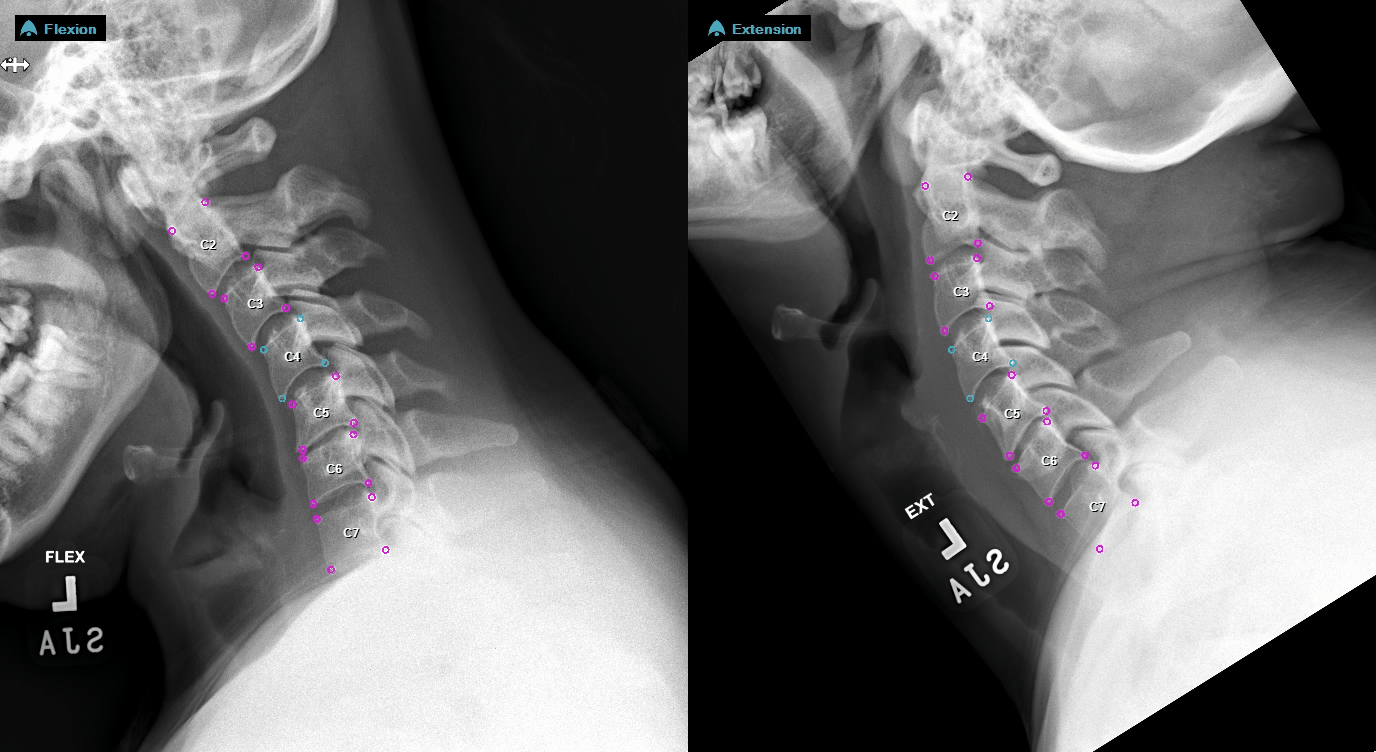
What the Analysis Reveals
DRMA is particularly valuable after auto collisions, work injuries, sports injuries, falls, or for chronic spinal discomfort that hasn’t been fully explained by other imaging. It’s often helpful when an MRI appears normal but you’re still experiencing symptoms. Ligament injuries frequently don’t show up on static MRIs, but they absolutely affect how your spine moves.
For most patients, DRMA is typically performed once, often after an injury or when symptoms first begin. This measurement process can be done as a standalone assessment or as part of a broader care plan at the practice. There’s no requirement to receive chiropractic adjustments to have DRMA performed. Some patients come in solely for testing, while others choose to combine it with additional services.
Your DRMA Appointment: What to Expect
A DRMA appointment is straightforward and designed to provide clear answers about how your spine functions. The analysis takes place after your X-rays are captured, so there’s no additional discomfort and no special preparation required. Controlled motion X-rays capture your spine in different positions, helping Dr. Schmidt see how it moves rather than just how it looks when still. Your images are processed using advanced digital measurement tools that identify each vertebra and map their positions. A trained radiology team reviews these measurements and creates a detailed motion analysis report showing how much each vertebra moves and whether any segments move too much or too little. Dr. Schmidt will review these findings with you and explain what they mean for your symptoms.
When Your Symptoms Deserve a Real Answer
If you’ve been struggling with discomfort that hasn’t been fully explained, or if you’ve recently experienced trauma and want objective information about your spinal stability, DRMA can provide the answers you need. Reach out to Schmidt Chiropractic Clinic today to learn more about how this advanced analysis can support your path toward better health and greater peace of mind.
